The Silence of the Lambs has made itself at home at His Majesty’s Theatre this week – with a nice Chianti, of course. One of cinema’s most suspenseful thrillers, bringing it to the stage is no mean feat, but this production wastes little time in proving it can hold its own. From the moment the lights go down, the audience is gripped by an unsettling sense of suspense.
Audiences familiar with the iconic film shouldn’t expect a scene-for-scene recreation. Gina Gionfriddo’s adaptation follows the novel’s path more closely, with cuts and alterations made along the way to bring Thomas Harris’ story to the stage. It’s therefore best approached not as a replica of the film, but as a distinct theatrical interpretation of a story many will already know.
When FBI trainee Clarice Starling is sent to interview the imprisoned psychiatrist and infamous murderer Hannibal Lecter, she hopes his brilliant mind can help catch a sadistic new serial killer, Buffalo Bill. With another girl missing and time running out, Clarice must enter a dangerous psychological game with Lecter, but the closer she gets to his mind, the harder it becomes to keep him out of hers.
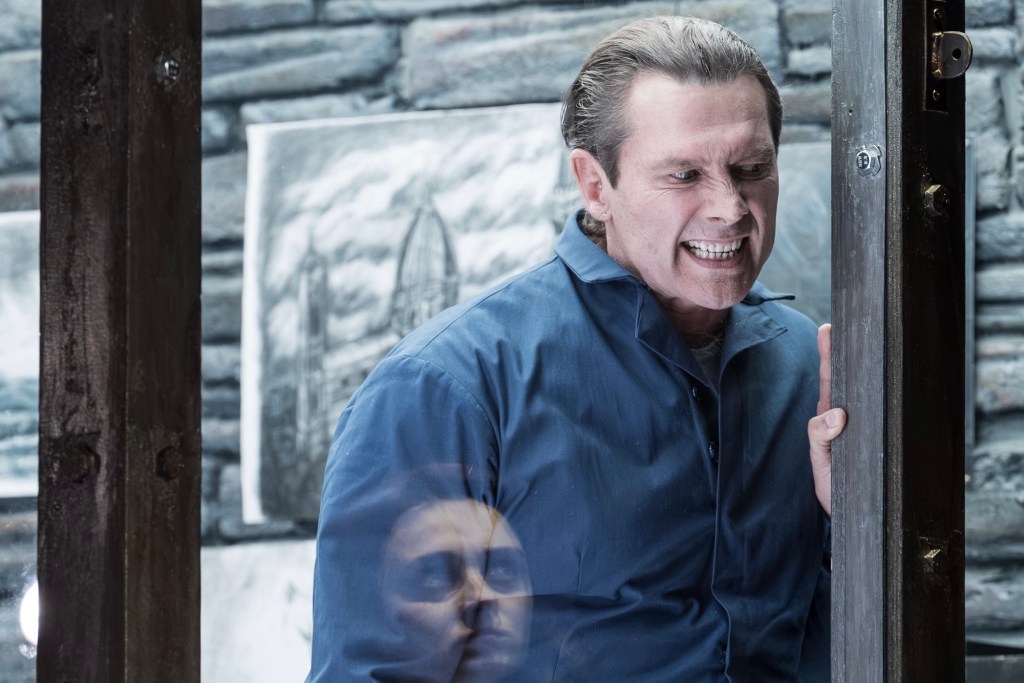
John Partridge is absolutely impeccable as Hannibal Lecter. Faced with a character so indelibly associated with Anthony Hopkins, Partridge wisely avoids attempting an imitation, instead creating his own rendition of the infamous cannibal. His Lecter drips with charisma and charm, but there is always the chilling awareness that beneath that composure sits a man who would have very little trouble ripping your face off and eating it. Partridge holds the audience on his every word, allowing the smallest pause, glance or change in tone to become loaded with threat. There is a constant sense that he is a timebomb waiting to go off, making every scene with Lecter an exercise in waiting for the inevitable explosion.
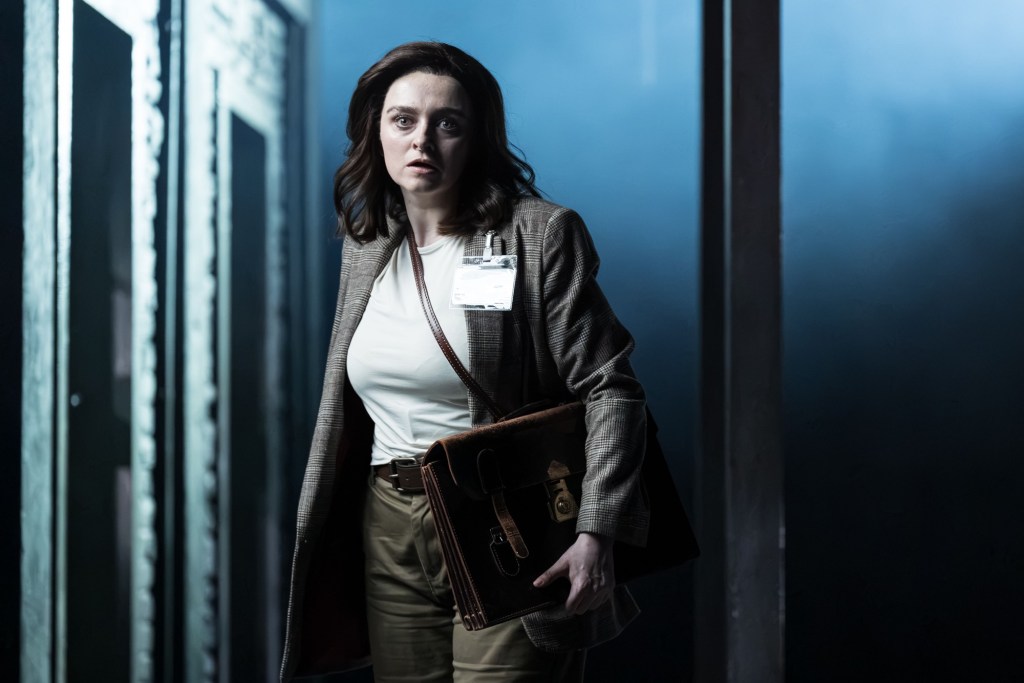
Mollie Gallagher gives an excellent rendition of Clarice Starling, capturing the determination and intelligence that have made the character such an iconic heroine. While inevitably reminiscent of Jodie Foster’s celebrated performance, she more than holds her own opposite Partridge, with their exchanges crackling with an electric, palpable tension. Their dialogue is razor-sharp, and the psychological sparring between the two becomes some of the production’s most compelling material.
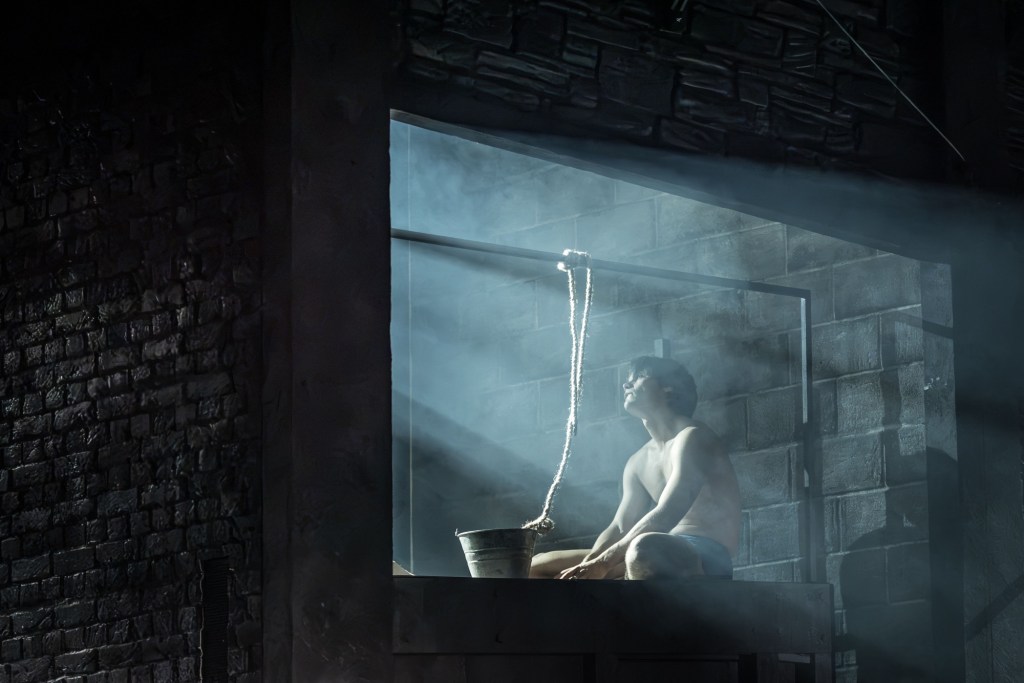
Understudying as Jame Gumb, Mark Peachey nails the serial-killer charm that makes Buffalo Bill so deeply unsettling. There is something disarmingly sweet and almost charming about Gumb, right up until the moment you remember exactly who he is and what he intends to do to his victims. Peachey brings a thoughtfulness and patience to the character that allows the menace to sit quietly in the air rather than being played for obvious effect. It is precisely this restraint that makes him so uncomfortable to watch, particularly during the final moments of the first act.
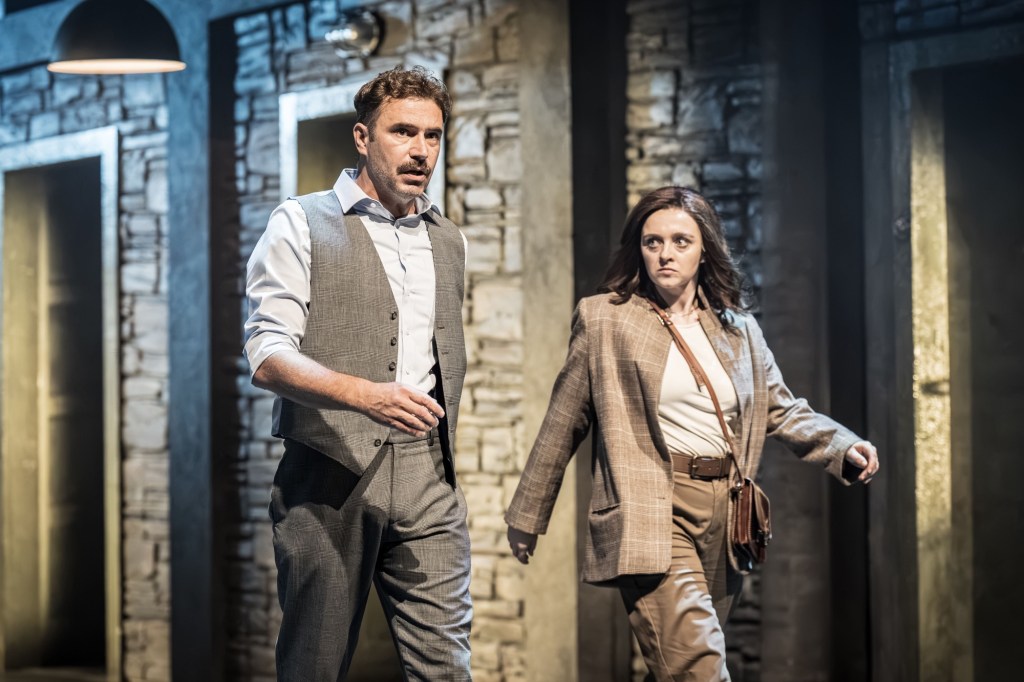
Oliver Farnworth’s Jack Crawford is driven by a palpable desperation to catch Buffalo Bill before another woman becomes a victim. His Crawford provides a necessary sense of urgency to the FBI storyline, while his interactions with Gallagher’s Clarice establish the professional pressures she is facing as she attempts to prove herself in a male-dominated environment.
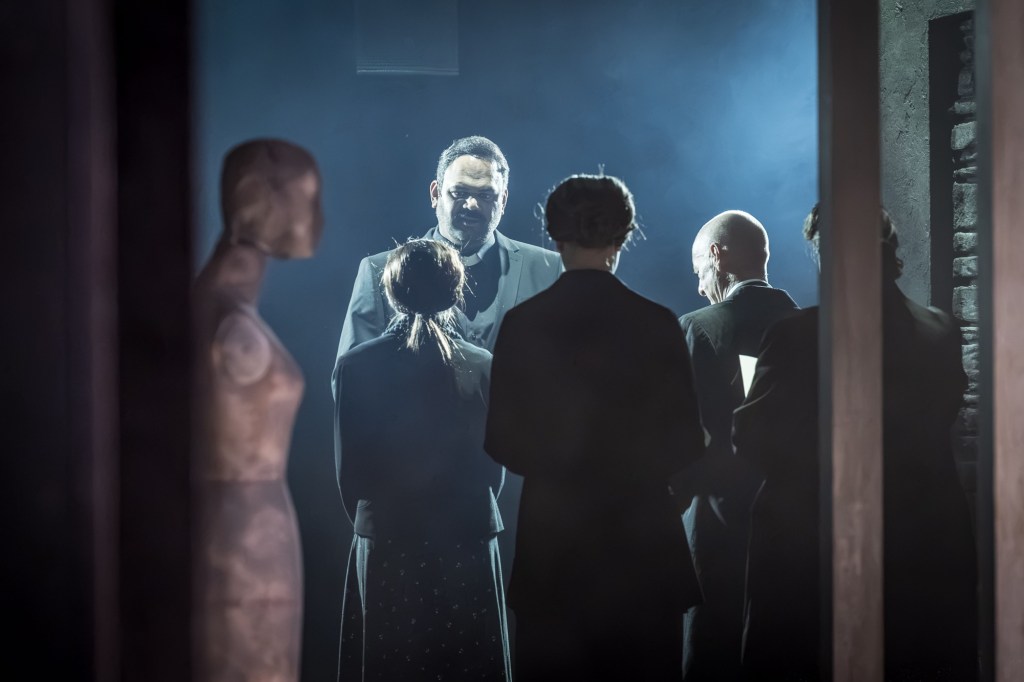
The ensemble are far more than supporting players, physically helping to keep the production moving at an impressively slick pace. Lottie Amor, Andrew Joshi, Jonny Magnanti, Jo Mousley, Minal Patel and Mary Timbrell-Hill cover a range of roles throughout the production, from FBI trainees and funeral attendees to the victims of both Buffalo Bill and Hannibal Lecter. Their contribution goes beyond the multi-roling, however, as they are constantly shifting set and transforming the stage around the principal action. These transitions are slick and unobtrusive, maintaining the production’s tight pace and cinematic rhythm. Their presence ensures the world of the play never feels empty, while their physical work behind the scenes becomes an important part of the storytelling itself.
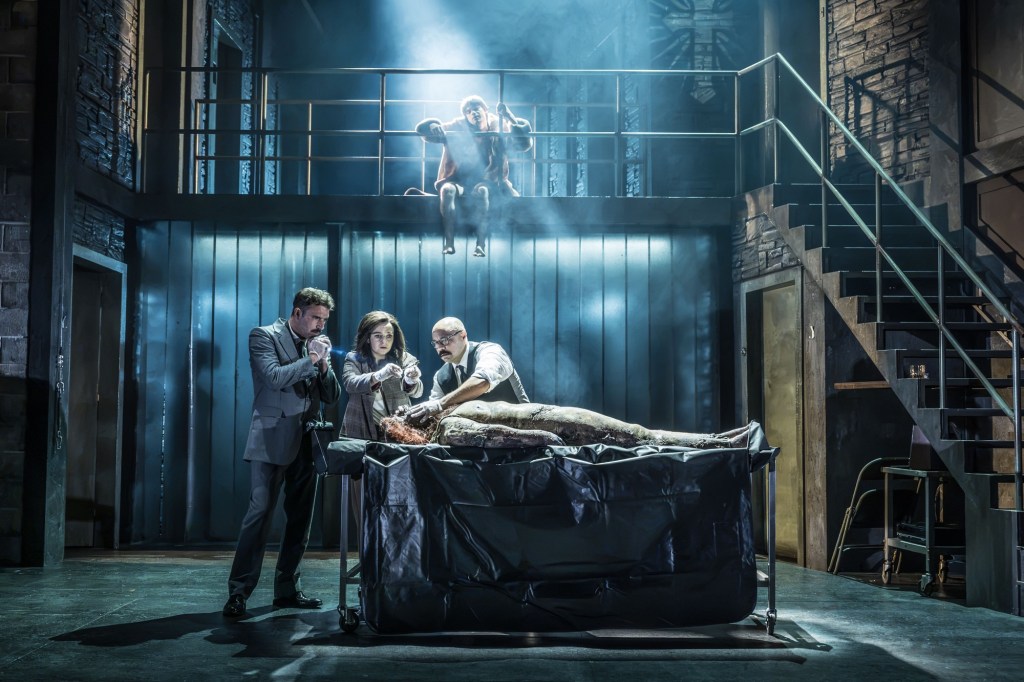
Gina Gionfriddo’s adaptation successfully translates Thomas Harris’s novel to the stage, crafting a fast-paced thriller that retains the story’s unsettling atmosphere. As with any adaptation of such a well-known work, cuts and changes have been made, but Gionfriddo excels in the razor-sharp dialogue, particularly in the exchanges between Clarice and Lecter. While the second act occasionally feels as though it is hurrying towards its conclusion, the scale and ambition of condensing such an iconic story into a theatrical experience is clear, and the adaptation hits the key beats audiences will be hoping for.
Director Nikolai Foster handles the material with an assured touch, maintaining momentum without allowing the pace to overwhelm the tension at the heart of the piece. The race to catch Buffalo Bill unfolds with a constant sense of urgency, yet Foster understands that the production’s greatest strength lies in its quieter moments. The scenes between Clarice and Hannibal Lecter are expertly staged, allowing their complex relationship to develop through a gripping psychological battle that continually pushes the boundaries between FBI profiler and serial killer. Foster keeps the audience hooked throughout, balancing suspense with character in equal measure.
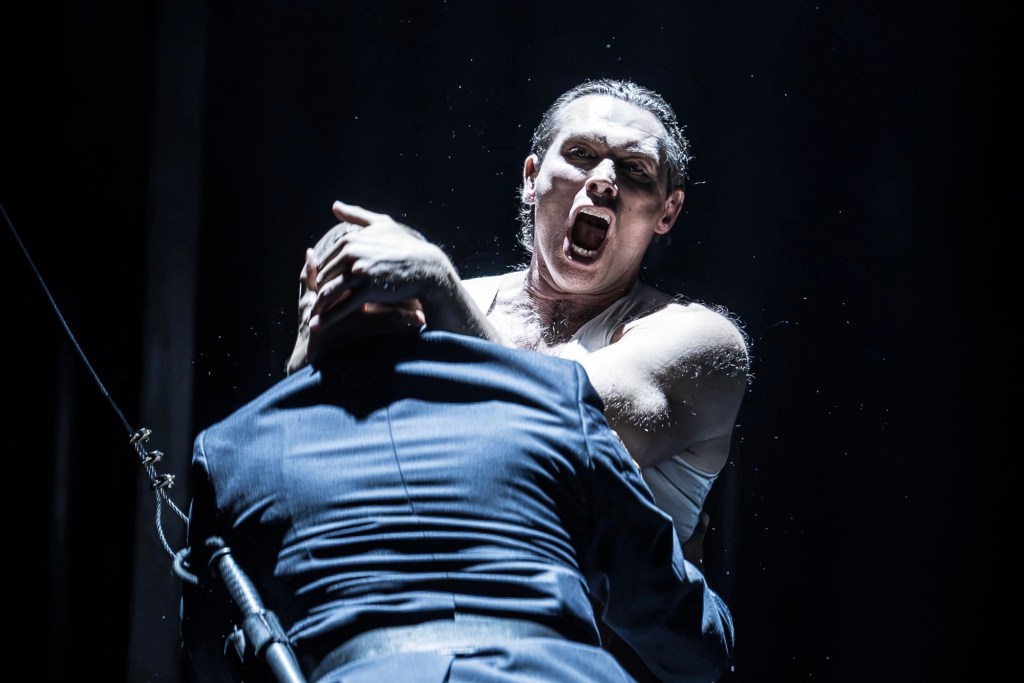
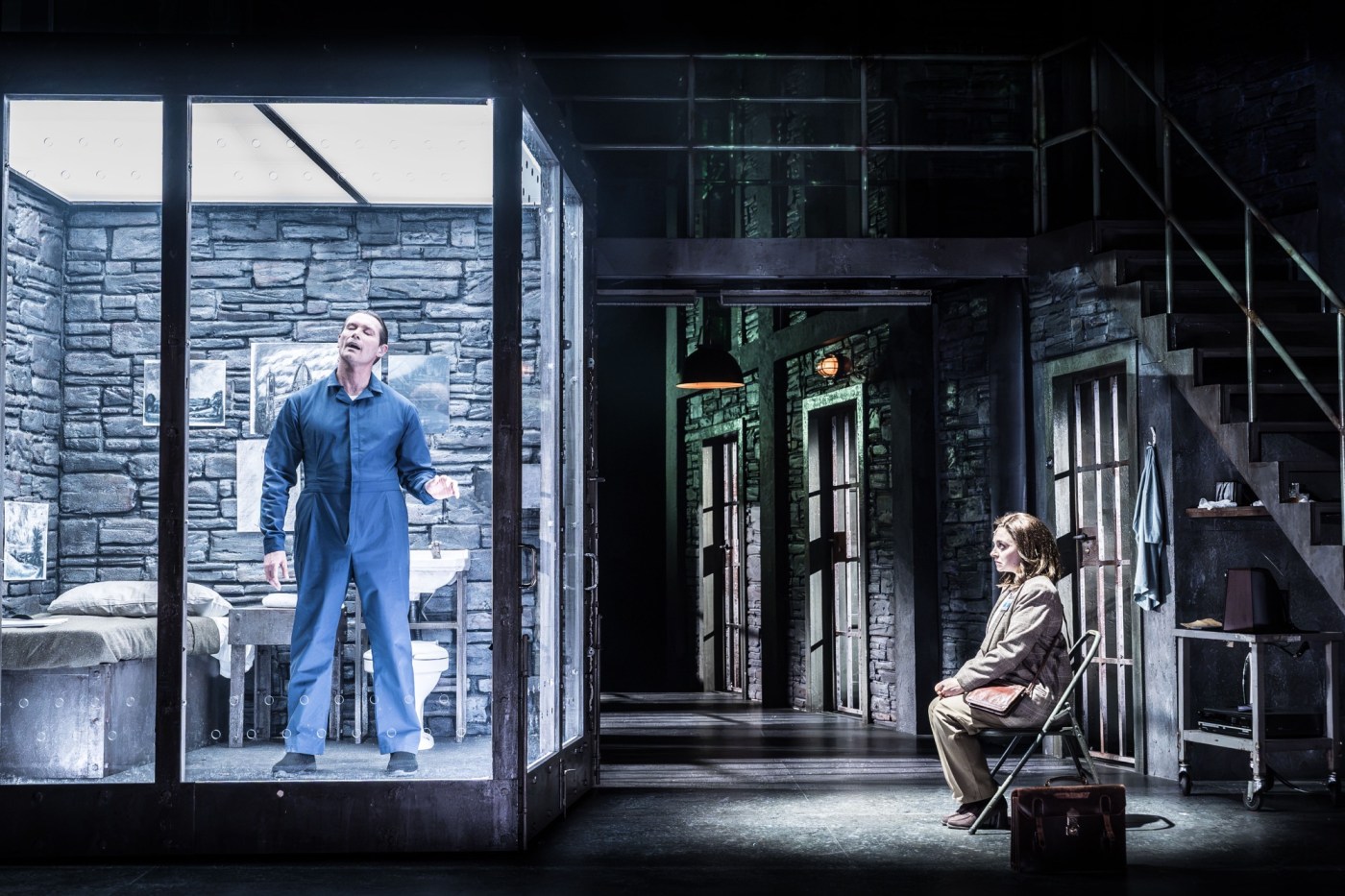
Michael Taylor’s set design is a standout element of the production. Beautifully detailed without becoming cluttered, the design rewards close attention, from the eerie glow of television screens to the small personal touches within Lecter’s cell, including Clarice’s portrait hanging on the wall. These details help create a rich, believable world that feels both cinematic and distinctly theatrical. Taylor’s design is perfectly complemented by Howard Hudson’s lighting, which carves textured windows of light across the stage and uses saturation, shadow and contrast to create depth, atmosphere and unease.
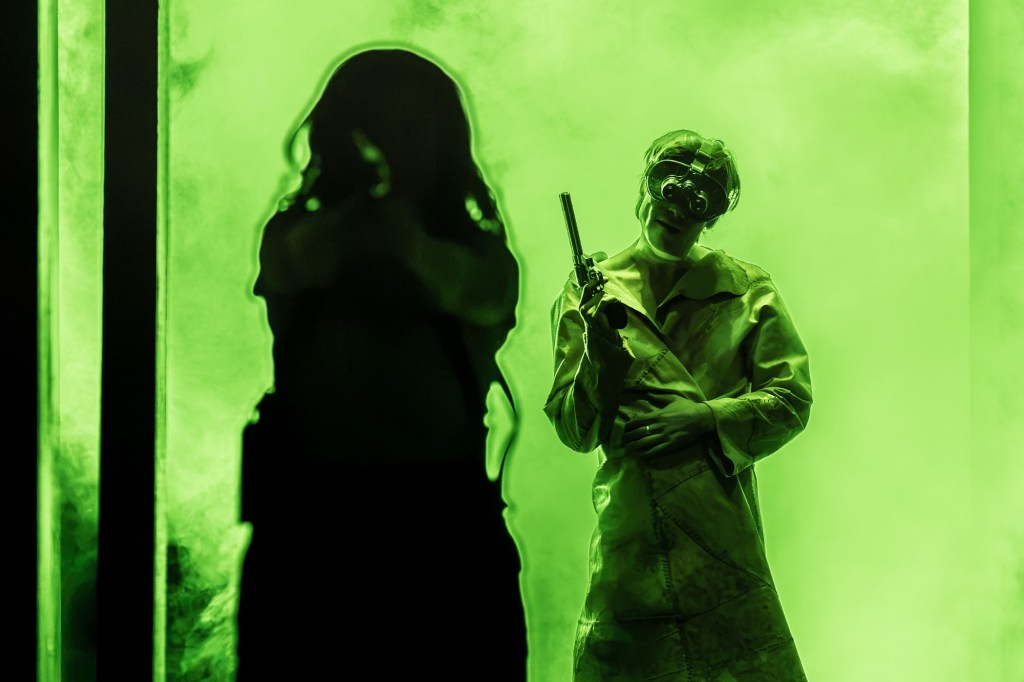
George Reeve’s projection design is used with remarkable restraint and precision. Many modern productions rely heavily on projections to do much of the storytelling, but here they are used to enhance rather than dominate. From Buffalo Bill’s unsettling home videos cast across the stage to the recurring moth motifs woven throughout the production, the projections add detail, symbolism and atmosphere without ever becoming distracting. It is thoughtful design work that quietly elevates the production as a whole.
Grant Olding’s composition and Carolyn Downing’s sound design play an essential role in building the world of the play. Familiar songs and period details keep us rooted firmly in the 1980s, while an unsettling underscoring continually tightens the tension. Voice effects during tape recordings and phone calls add texture and authenticity, while the wider soundscape; passing cars, distant singers in bars, chirping crickets and the sudden crack of gunshots, together create an immersive environment that surrounds the audience. Together, Olding and Downing manipulate sound with precision, subtly pulling the audience deeper into the production’s dark and unsettling world.
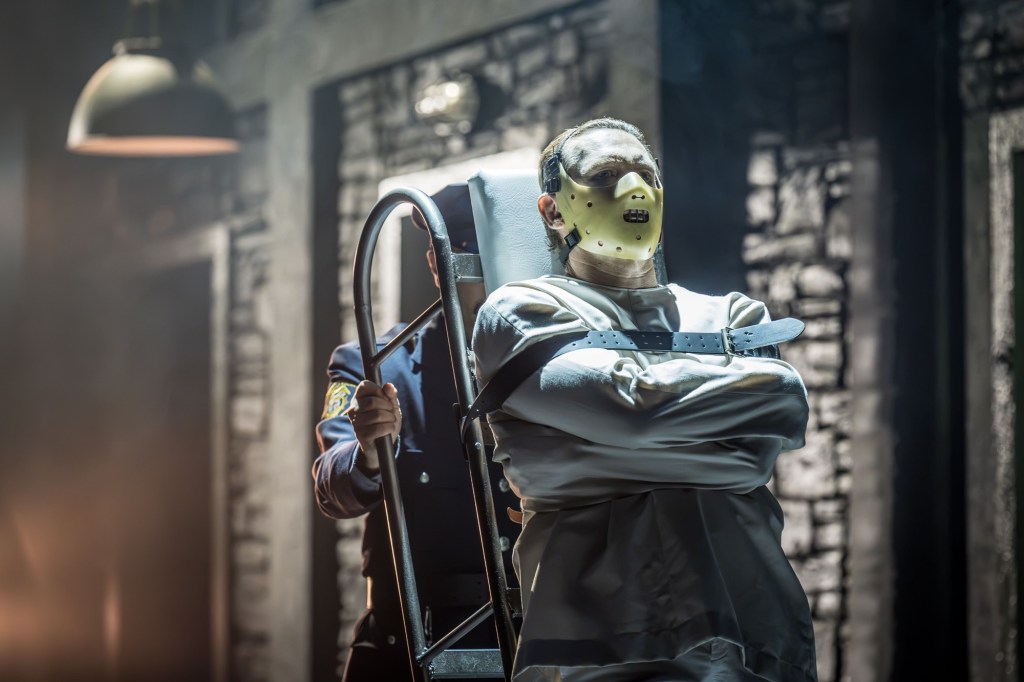
The Silence of the Lambs is a gripping night at the theatre, successfully capturing the suspense and psychological unease that have made the story so enduring. While the adaptation occasionally feels rushed towards its conclusion, the production is at its strongest when it allows its characters to breathe. With a stellar central cast, striking design and an atmosphere that keeps you constantly on edge, this is a thriller that proves just as unsettling on stage as it is on screen.
Silence of the Lambs is running from 1st-5th September at His Majesty’s Theatre. Get your tickets here: https://www.aberdeenperformingarts.com/whats-on/silence-of-the-lambs/


Leave a Reply