
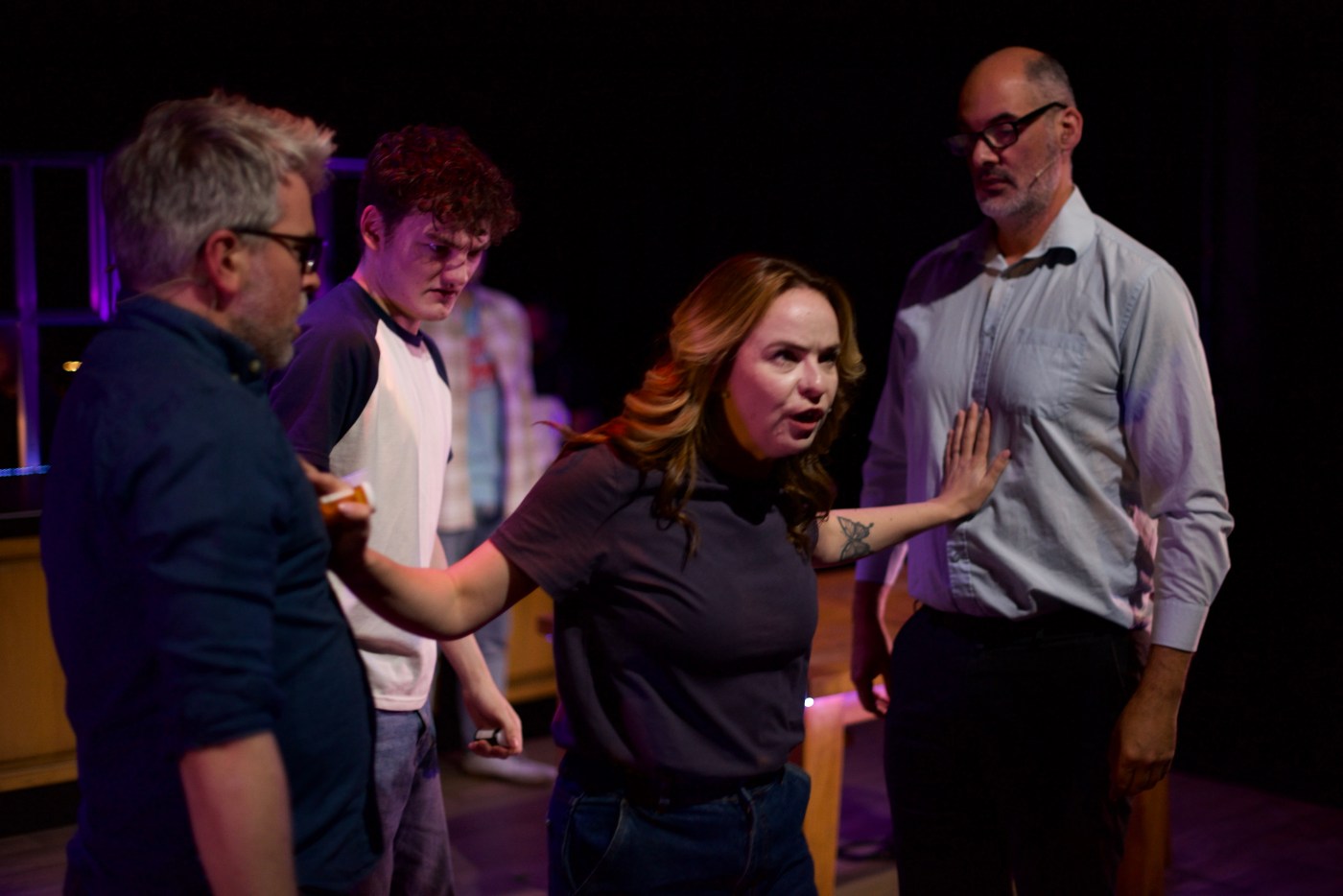
Following their sold-out 2025 production of Jonathan Larson’s tick, tick… BOOM!, Aberdeen-based theatre company Hallirackit return to The Lemon Tree this week with Next to Normal, one of musical theatre’s most emotionally powerful and ambitious works of the past 20 years.
Next to Normal explores how a seemingly ‘normal’ suburban American family attempts to cope with Diana, the mother, and her 16-year battle with bipolar disorder and unresolved grief.
The musical attracted critical acclaim long before its official Broadway run, earning an Outstanding New Score award from the Outer Critics Circle and a Drama Desk Award nomination for Alice Ripley’s portrayal of Diana during its workshop stage.
The show opened on Broadway in April 2009, subsequently receiving eleven Tony Award nominations and winning three: Best Original Score, Best Orchestration and Best Performance by a Leading Actress in a Musical for Ripley. In 2010, it also won the Pulitzer Prize for Drama, becoming only the eighth musical in history to receive the honour.
Despite its Broadway success, regional productions across the US and international productions in countries including Japan, Australia, South Korea, China and across South America, Next to Normal did not receive a London run until 2023, when it premiered at the Donmar Warehouse. Following a successful three-month run starring Broadway royalty Caissie Levy, the production transferred to the West End in 2024. It subsequently received four Olivier Award nominations: Best New Musical, Best Actress for Levy, Best Actor in a Supporting Role for Jack Wolfe as Gabe, and Best Actress in a Supporting Role for Eleanor Worthington-Cox as Natalie. More recently, the musical received its Scottish premiere from Edinburgh-based company, Bare at this year’s Edinburgh Festival Fringe.
This week, it is Hallirackit’s turn, and the production certainly does not disappoint. Somewhat far removed from the glistening lights of Broadway and London’s West End, we are transported into the Goodman family home at The Lemon Tree in Aberdeen. This 150-seat studio space provides the ideal setting, creating an atmosphere that feels immediate, immersive and, at times, almost uncomfortably close – in the best possible way.
This review may contain spoilers for Next to Normal.
Fiona Crichton is an absolute force as Diana, a suburban mother struggling with worsening bipolar disorder. Crichton is not only a gifted vocalist and actor but a masterful storyteller. Even the smallest gesture or fleeting expression invites the audience to question what Diana is thinking and how she is processing the world around her, including what is true and what may be her own delusion. It is incredibly difficult to single out one defining moment from Crichton’s performance as she navigates the demanding, rock-heavy score with remarkable command. She feels entirely at home in the role, taking the reigns and the audience through Diana’s most intense moments without losing sight of the person beneath them. However, the quieter numbers, particularly ‘I Miss the Mountains’ in Act One and ‘So Anyway’ in Act Two, demonstrate the full extent of her range, allowing vulnerability to emerge beneath the character’s outward turmoil.
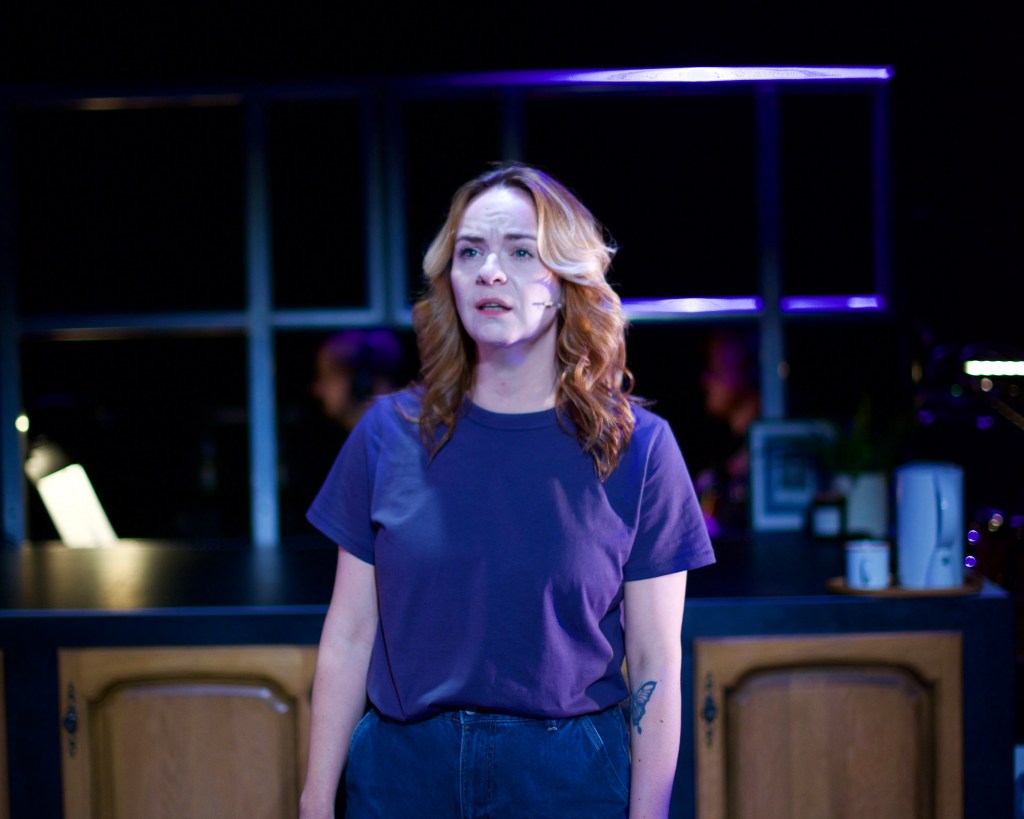
Photo: Dan Stoneman
Opposite Crichton is Kenneth Lypka as Dan, a confused, occasionally awkward but desperately devoted husband and father. It is a joy to see Lypka embrace a role that allows him to explore both the kooky, witty side of a man using humour to cope and the devastating emotional weight that lies beneath it. Crichton and Lypka make a compelling pairing, their relationship feeling grounded and entirely credible. As the piece intends, Lypka provides a counterbalance to Diana’s increasingly fractured reality, helping the audience piece together the complexities of the Goodman family.
A Hallirackit newcomer, but no stranger to Aberdeen’s amateur dramatic scene, Alex Donnelly takes on the role of Gabe. Donnelly delivers a confident, considered performance, with a clear sense of character and purpose. He works particularly well opposite Crichton, and their scenes together convincingly capture the seemingly normal bond between mother and son. In keeping with the nature of the character, Gabe can sometimes feel like a ‘blink and you’ll miss him’ presence, slipping on and off stage almost undetected while remaining a constant undercurrent throughout the story. His Act One solo, ‘I’m Alive’, is a particular highlight, combining assured vocals with a strong sense of character development as we learn the truth about Gabe.
While the six-strong cast work cohesively as an ensemble, Erin Grant stands out as Natalie, Diana and Dan’s troubled 16 year old daughter. Grant’s Natalie is immediately likeable and relatable, with a warmth that rings true even as her character develops struggles of her own. Her vocal tone is wonderfully distinctive and somewhat addictive. She also provides a vital counterpoint to Crichton and Lypka, matching their anger and frustration when required while finding genuine tenderness in the quieter moments. Grant gives Natalie a sense of humanity that makes her journey all the more affecting.
Complementing Grant’s Natalie and providing the ‘Perfect’ yin to her yang is Finlay Keir as Henry. Charming from the offset, Keir brings charisma and assured vocals to the role, fitting naturally into the unconventional puzzle that is the Goodman family crisis. The chemistry between Grant and Keir feels sincere, capturing the innocence and heart of young love against the increasingly turbulent world crumbling around them. Their scenes offer welcome moments of light without diminishing the seriousness of the wider story, especially as their characters develop and grow further apart in Act 2.
Last, but certainly not least, is Dan Greavey as Dr Fine/Dr Madden. Greavey is a complete professional, bringing impeccable comic timing where required and a strong sense of contrast to his scenes with Crichton’s Diana. The pair work seamlessly together, making these interactions feel both natural and gripping. Having watched the Donmar Warehouse pro-shot, I confess I had not given the Doctor/Diana sequences much thought previously. Under Hannah Cook’s direction, however, they become some of the most compelling exchanges in the production. It is a genuine pleasure to see Dan Greavey treading the boards in Aberdeen once again.
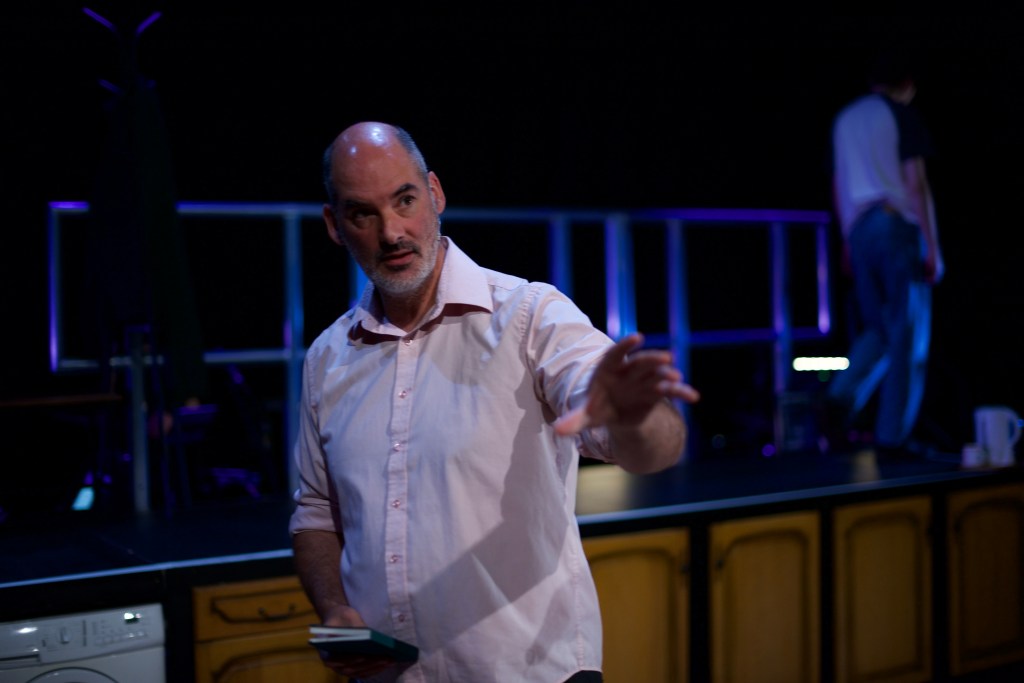
Photo Credit: Dan Stoneman
Director, Producer and Hallirackit founder Hannah Cook is no stranger to directing, although her previous ventures have tended towards the more playful, often with an unmistakable streak of silliness that she achieves so well. She maintains that energy in the lighter moments of Next to Normal while approaching its more difficult themes with sensitivity and care.
Cook’s attention to detail and vision is clear, yet her direction never feels overly prescriptive or forced. There remains a sense of freedom for the cast to respond instinctively to one another, particularly during the production’s most intense and emotionally charged scenes. Next to Normal is a show that could easily become ‘over-directed’ against the weight of its subject matter. Instead, Cook finds a thoughtful balance between detail, precision and spontaneity, allowing the material to speak for itself and flow naturally.
The score, written by Tom Kitt with lyrics by Brian Yorkey, is a formidable undertaking, and Musical Director Mikey Innes and Assistant Musical Director Ethan Lumsden rise to the challenge admirably. This is not a show that should sound ‘pretty’. The score almost appears as a character itself, conveying the instability, frustration and emotional exhaustion at the heart of the story, as well as the beauty that occasionally breaks through in quieter moments.
With Cook’s direction and careful collaboration from Innes and Lumsden, the production strikes a perfect balance. Harmonies linger hauntingly in the studio space, while the cast are given the freedom to communicate the appropriate emotion through their voices, rather than worrying if something sounded perfect or not. Kitt’s score is drowning in melancholy and familiarity, with recurring musical motifs that feel as though they reveal something new each time they return. It is a score that keeps the audience engaged, constantly shifting in tone while remaining cohesive.
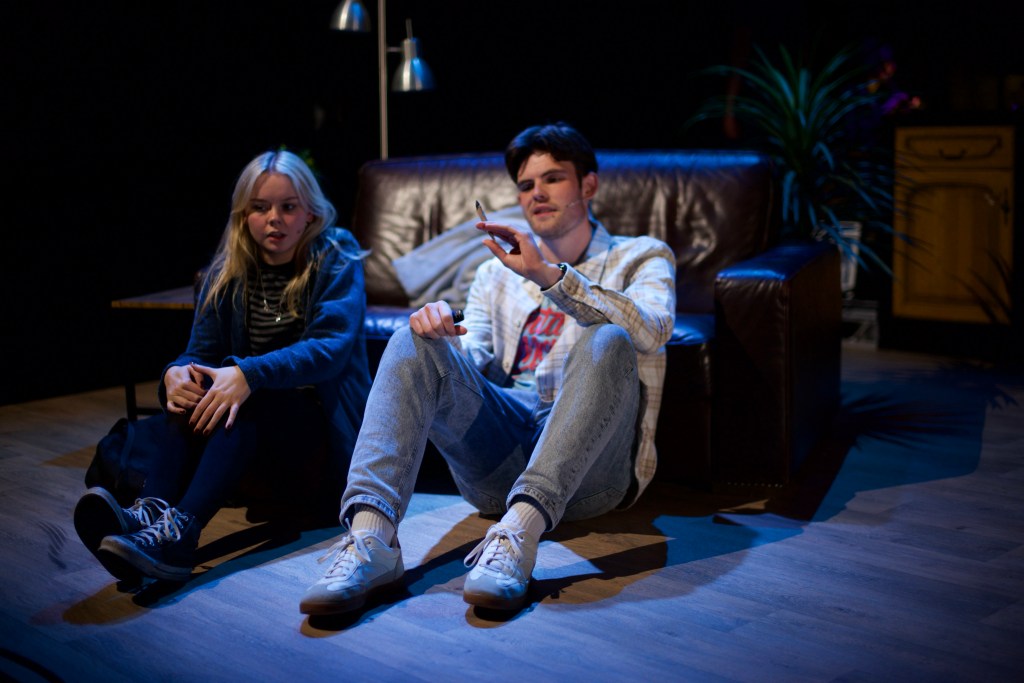
Photo: Dan Stoneman
A special mention must go to Brian Gunnee for sound design. In a musical as heavily sung-through as Next to Normal, where important plot points can easily become lost beneath the music, maintaining clarity is essential. Gunnee achieves an excellent balance between the performers and the band, ensuring the lyrics remain clear and the emotional detail is never lost. The result allows the audience to remain fully immersed in the story without missing a beat.
Movement Director Sarah Smith is no stranger to the Aberdeen amateur dramatic scene. Having spent many years as choreographer for Aberdeen Student Show and Inverurie Panto, it is a delight to see her turn her hand to a production of this nature.
Smith’s movement direction feels organic, never forced or shoehorned. The cast moves with ease, making it difficult to distinguish where the movement direction ends and the blocking begins. Cook and Smith clearly work well together, finding a natural rhythm that serves the story rather than distracting from it. This is particularly effective in ‘It’s Gonna Be Good’, ‘Make Up Your Mind/Catch Me I’m Falling’ and ‘Wish I Were Here’, where the physicality adds another layer to the storytelling. Smith helps create a production that moves fluidly from one moment to the next, maintaining momentum without sacrificing the emotional weight of the story.
Lou Turnbull’s lighting design compliments Martin Innes’ set design beautifully. Again, both elements could easily overwhelm a show like Next to Normal, but Turnbull succeeds in lighting Innes’ set as an ordinary family home while introducing a sharper visual edge that reflects Diana’s increasingly distorted perception of reality. The lighting enhances the atmosphere without drawing unnecessary attention to itself.
Innes’ set is equally effective in its own right, providing a practical yet visually engaging backdrop that supports Cook’s vision without restricting the action.
Overall, Hallirackit Theatre’s production of Next to Normal is an emotional rollercoaster, tackling a monumental score and sensitive subject matter with care, conviction and a clear understanding of the story it is telling.
Following the success of their debut production, Wilford Wellman’s Wellbeing, at the Edinburgh Fringe in 2024, a sold-out run of Jonathan Larson’s tick, tick… BOOM! in 2025, and now Next to Normal, Hallirackit continues to demonstrate what can be achieved on a smaller scale when ambition is matched with talent and thoughtful storytelling.
There is undoubtedly ‘Light’ in Aberdeen’s amateur theatre scene for intimate, character-driven productions that pack an emotional punch while celebrating and nurturing local talent, both on and off stage.
That light is Hallirackit Theatre.
5 stars
Next to Normal runs at the Lemon Tree, Aberdeen until Saturday 17th October – with best availability Thursday 15th and Friday 16th October. Tickets can be found here: https://www.aberdeenperformingarts.com/whats-on/next-to-normal/


Leave a Reply